Sculpture in movement: meeting with an artist who invites the public to touch his works
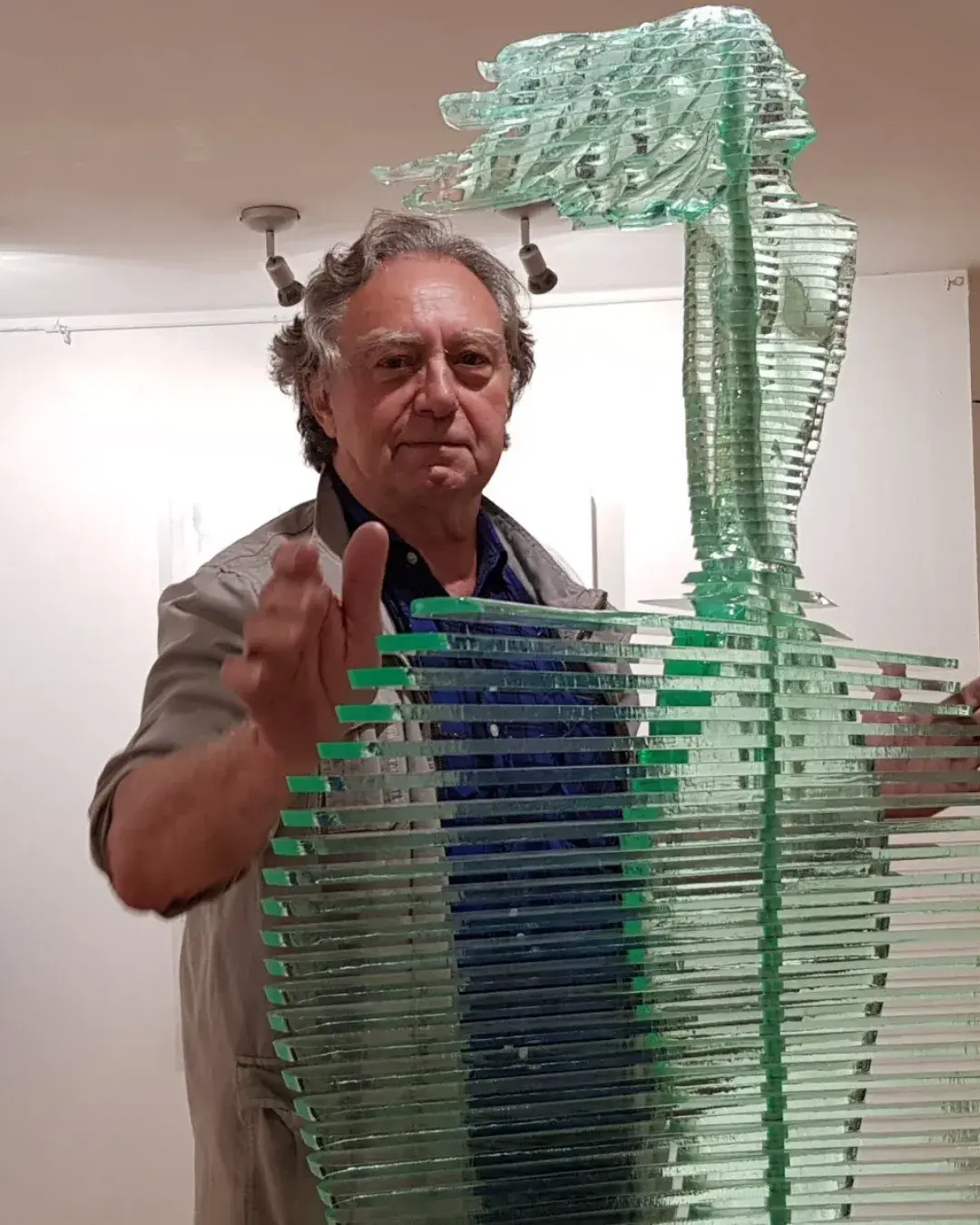
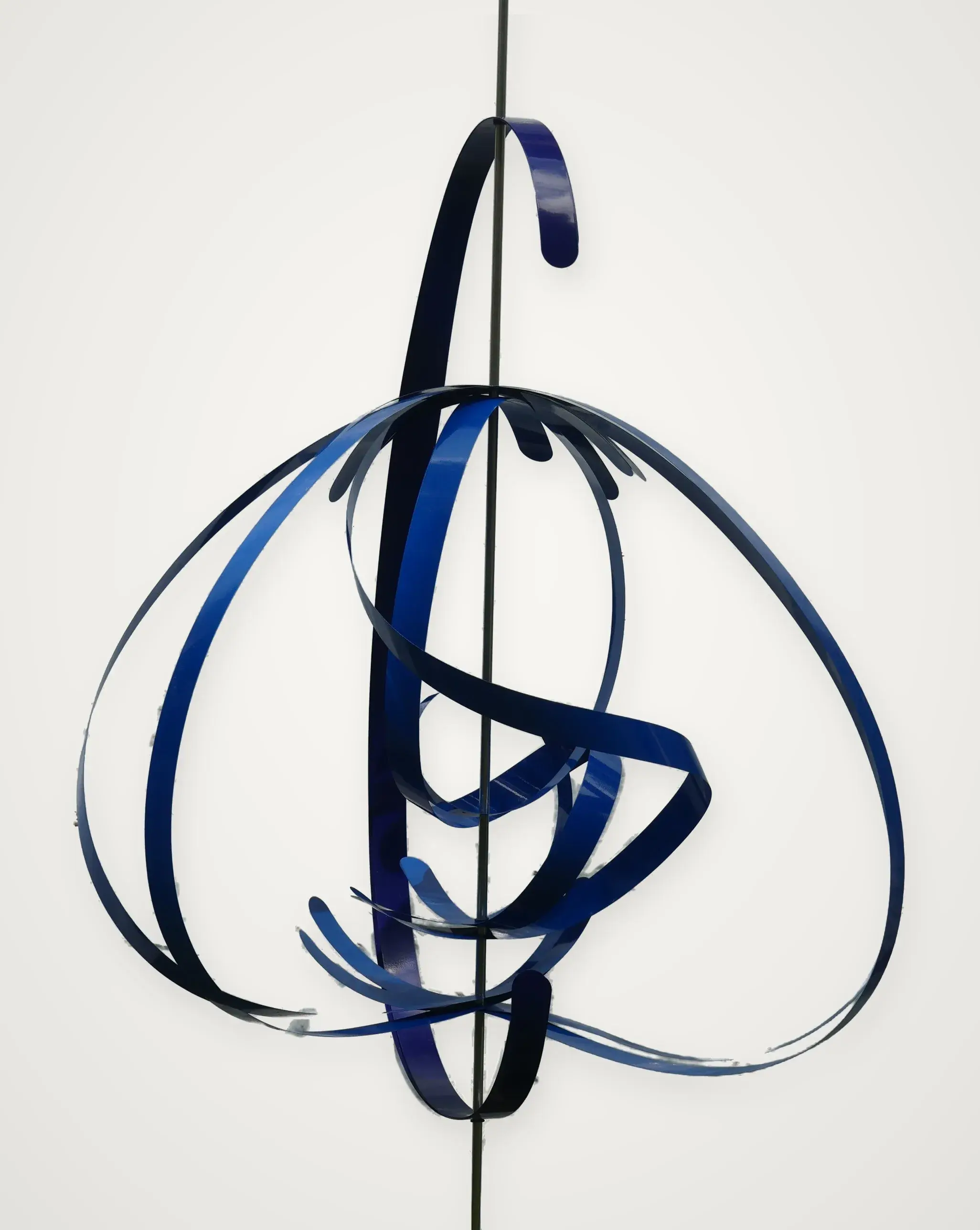
What if, for once, we were allowed to touch the sculptures? Since 1989, this artist has explored another way of thinking about sculpture by creating works composed of several mobile elements, which anyone can move and recompose as they wish. Far from the fixed work, he imagines a living sculpture, open to a multitude of configurations and interpretations. On the occasion of this exhibition, he looks back on his career, his artistic approach and his unique relationship with the material. At 84, he defends a generous vision of art, in which the collector becomes an interpreter and participates fully in the life of the work.
In 1989, what no longer satisfied you about “classical” sculpture?
In fact, I didn’t have a real “revelation”. I simply realized that a new gesture for me, creating an entire work in several elements, could enrich my current work and open up new perspectives for sculpture in general. I looked for a long time to see who could have explored this path before me...
Calder, Soto and Agam make their works move with the wind, the motor or the eye. You only trust the hand. Why this choice?
I also trust the imagination of the collector! It is he who will choose a configuration that he likes, sometimes even a configuration that I had not imagined when creating the work. He will also have the curiosity to repeat the gesture, once, perhaps a thousand times, to try to explore all the possibilities.
How would you present this exhibition to someone who is not familiar with your work?
I invite you to discover something that few people have had the opportunity to see. It is not a question of transgressing the almost absolute prohibition according to which “we do not touch the sculptures!” ", but simply to show that by giving this freedom to the visitor, we can go further in the appropriation of an art often considered monolithic.
How many sculptures are you presenting?
There will be six or seven sculptures on site. Perhaps also one or two small pieces that the gallery owner can keep in his hands…
When you exhibit a modular sculpture, are you showing a work or just one of its possibilities?
The work exhibited is always only one possibility among thousands. You only need to move a single element to change its appearance, sometimes almost imperceptibly.
Will visitors be able to handle the works?
Yes of course ! During the exhibition, this will be done in the presence of the gallery owner, who remains responsible. You will quickly discover a multitude of positions that are pleasant to the eye and the mind.
In the logic of the “partition”, where does your gesture end and that of the collector begins?
This score, like a musical score, comes to life thanks to two people: the creator, who proposes a work, and the performer, who will bring it to life. Both bring something. The creator gives the material elements, which are definitive. The performer intervenes through his dexterity, his desire, his abilities and his sensitivity. It is this encounter that makes the work exist differently.
Can a work be “misconfigured”? Have you ever seen one of your pieces in someone’s home in a form that you disapproved of?
It happens that certain modulations please some and displease others. This is completely normal, everyone has the right to have their own vision of the world. For my part, as a sculptor, when I entrust one of my works to a collector, the latter can actually give it shapes that I might find more or less interesting. But I wouldn't allow myself to judge them.
Duchamp said that it is the viewers who make the paintings. In your case, aren’t they more the manipulators?
Of course ! But I would prefer not to use the word “manipulators”, which can have a particular connotation. The word “interpreters” suits me much better!
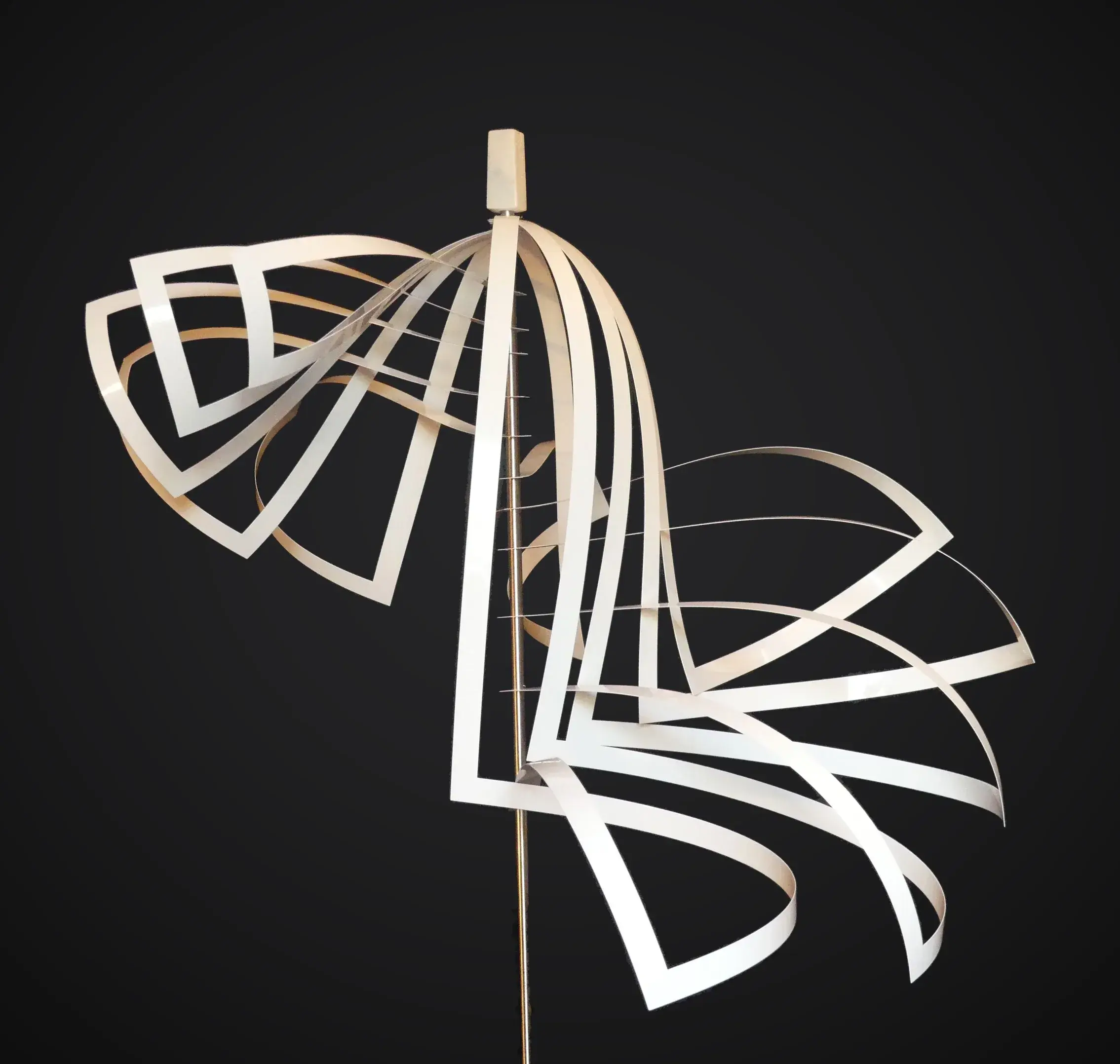
What happens to Carrara marble, symbol of the immutable, when you cut it into mobile elements?
Matter remains matter. It's just used differently.
Between the elements, there is emptiness. Do you work on it as a subject in its own right?
The void cannot be “worked”. For me, it is the consequence of working with the material. It is its presence which gives limits to the void and thus creates a space that can be qualified, named and made to exist. To work on this void, we must therefore work on the material. And of course, I remain attentive to what this space becomes and the representations it can give rise to.
Nearly a thousand works, almost all unique. If you only had to keep one, which one?
It’s a difficult choice! I'm going to call Shakespeare or Corneille to ask their advice. While waiting for their response, I prefer not to choose…
Is there a sculpture that you have not yet managed to create? What's stopping you?
Several, even! Sometimes it’s the material that isn’t suitable, sometimes the modulation doesn’t work as I would like. And then there are new ideas that take over and take me elsewhere. This is quite often the case! These sculptures generally end up at the back of the workshop. More rarely, I take them again to make a new work.
The final word: what would you like a visitor to take away when leaving the exhibition?
I would like him to leave with one or more works, of course! Or perhaps with a nice order for his company or offices. And why not with a monumental marble sculpture project, like those created in Carthage? We can dream... Some visitors will leave with the idea that they could “do the same”. Others will feel like they have discovered new things. Still others will think that art is inaccessible to them. This is false!
Practical information
- Address: Very Art Gallery 21 rue Michel Le Comte, 75003 Paris
- Dates: From Wednesday 2 to Sunday 6 December 2026
- Hours: Wednesday to Sunday, 12 p.m. to 7 p.m.
- Opening reception: Saturday December 5, 2026 at 6 p.m., upon registration
- Access: Metro Rambuteau (line 11) or Arts et Métiers (lines 3 and 11)
- Contact: 06 13 80 45 91 - boyer-sculpture@sfr.fr