From Christie's to independent advice: Nicolas Kaenzig reveals 25 years at the heart of the art market
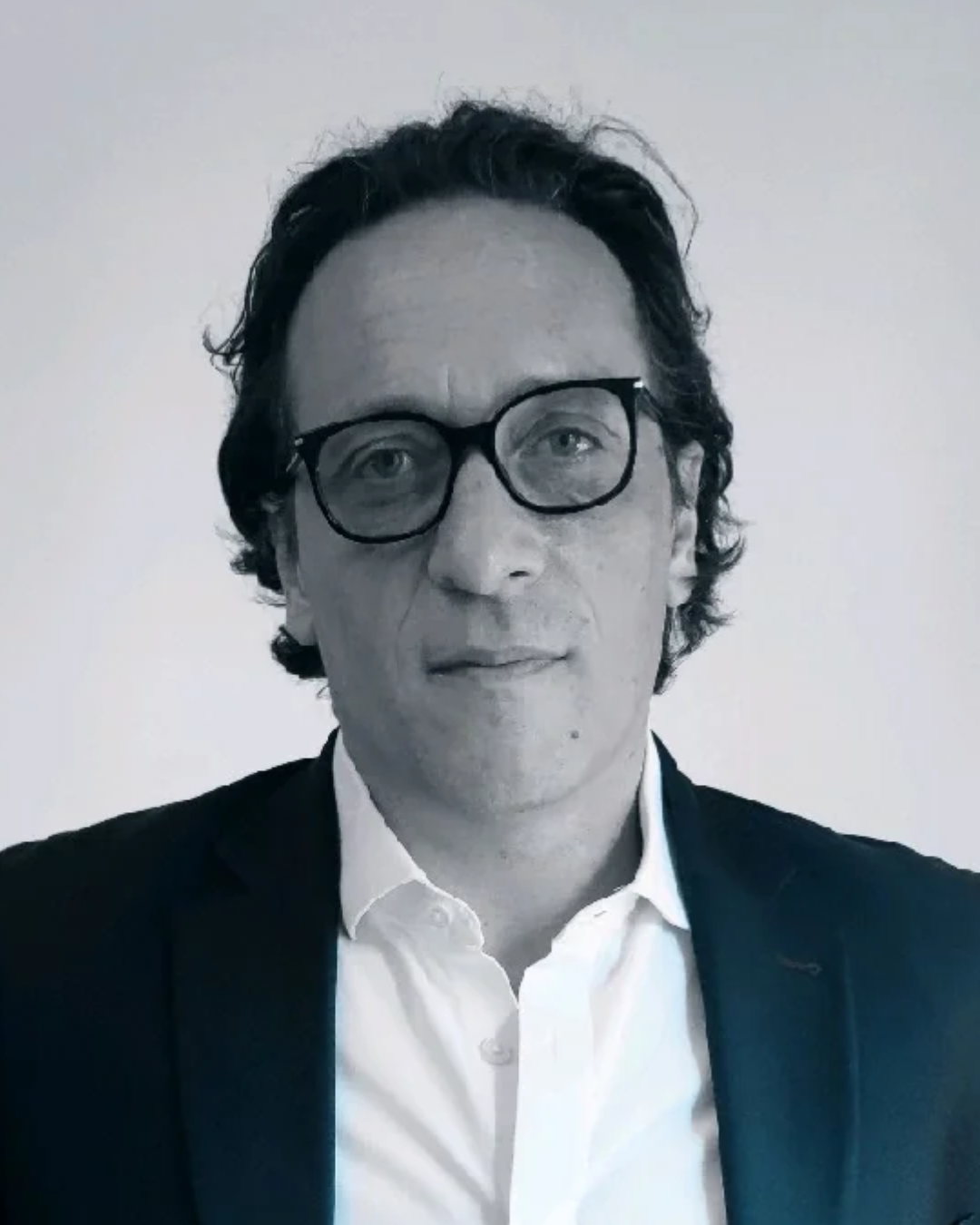
More than twenty years within the Christie's auction house, management of emblematic galleries, then the choice of independence. In this exclusive interview, expert and broker Nicolas Kaenzig delivers his analysis of a rapidly changing market. Between the quest for traceability, heritage arbitrations and deciphering trends, it reveals why the true value of a work is never reduced to its auction price.
You spent more than twenty years in a large international auction house. What do two decades at the heart of such a machine teach about the true value of works of art, beyond the official price?
It was never a number that taught me what a work was worth. The rating is only a snapshot, the price fixed at a given moment by the meeting of two wills. Value is multifactorial and infinitely richer. It integrates intangible dimensions: the history of the work; passionate desire; the family imprint. But also tangible elements such as rarity, state of conservation or the indisputable provenance. Twenty years at Christie's have taught me never to confuse the price with the reality of the work, its value.
Going from auctions to managing galleries like Mayoral then Anne de Villepoix involves a radical change of pace. How do we move from the logic of the “hammer blow” to that of the long-term relationship with artists and the loyalty of the collector?
The change of pace is radical. The hammer imposes urgency, auction, immediate liquidity. The gallery introduces a dimension that was absent from my experience in an auction house: direct work with living artists and long-term support for collectors. This passage made me aware of the real role of the intermediary: we are only couriers. Passers of ideas, stories, emotions, works from one hand to another, from one sensitivity to another.
What made you decide to become an independent broker today? Was it the need to regain freedom of speech, or the observation that the traditional market no longer met certain needs of buyers?
The trigger did not come from a specific day, but from an accumulation of moments where I saw advice dictated by a sales objective rather than by the real interest of the client. The art market remains a world of insiders, where the transactional dimension too often takes precedence over pedagogy. My inclination towards independent brokerage was born from the desire to put the experience accumulated in auction houses and galleries to the service of a real advisory role, beyond simple sales. Being independent allows me to support my clients with total freedom of speech, without stock to sell or catalog to fill: individuals; wealth management advice; family offices.
You have long been a specialist in Russian art. It is an extremely fascinating market, marked by great masterpieces but also by issues of provenance and counterfeiting that are sometimes very complex. How do we become tougher in such a sector?
It is a true school of rigor and humility. Faced with the challenges of falsification and the complex trajectories of this art, expertise never rests on the intuition of a single man. It is team work, where everyone examines the case for the prosecution and the defense. Systematic doubt must remain constructive: cross-referencing archives, critical literature and ownership history to support or contest the authenticity of a piece. This approach requires both absolute rigor and the courage to take risks when the work is impeccable.
How have the international context and the evolution of the great fortunes of the East transformed this market over the last twenty years?
Beyond the financial flows, what struck me the most in this market is its intimate and identity dimension. These collectors, who are quickly judged with enormous preconceptions, were born in a country, the USSR, which literally disappeared overnight. Faced with this historical void and the sweeping away of their landmarks, they had to reinvent their own identity. The purchasing frenzy for Russian art responded to this visceral need to reconnect with the great history of their country. Art became the vehicle for this cultural reappropriation, before more recent geopolitical tensions once again reconfigured this market.
Studies show that while almost all wealth managers see art as a tool for diversification, only a minority really knows how to integrate it into a wealth strategy. Why does this gap still persist between finance and art?
I see it at every meeting with an asset manager: the conviction is there, it's the execution that remains rare. The real explanation is structural. The art market is by nature inefficient, opaque and non-standardized, which deprives financial professionals of the reading keys necessary to transform a conviction into concrete allocation. Added to this, in the background, is what the economist Richard Thaler calls mental accounting: art in one box, financial assets in another, with no bridge between the two. My role is to bridge this gap and make the issues of these two sides of the same coin intelligible and concrete.
How do we manage to convince a pragmatic asset manager of the value of a painting without “disenchanting” the work and reducing it to a simple yield curve?
It's a paradox that I experience very concretely: it is often easier to convince a Family Office than the art market itself. Prospective studies and specialized reports today clearly demonstrate the strategic interest of art in a global heritage allocation. Family Offices are aware of this, but lack in-house expert skills to have a clear vision. Conversely, the traditional art market navigates amid multiple cognitive biases that make objectification difficult: the financial aspect, which would corrupt, is often opposed to creative artistic principles. My role is to bring the engineering and analytical clarity that both worlds lack so that they understand each other.
Do you observe among new collectors a primacy of cultural crush, or has art become a pure instrument of risk management?
I observe a real hybridization of behaviors among my clients. The pure crush, disconnected from any economic reality, tends to disappear from a certain level of transaction. Today's buyer demands sincere aesthetic pleasure, but wants to ensure that their decision is rationally supported. Art has become an instrument carefully arbitrated within the framework of global management of heritage and transmission issues, where passion provides the impetus and the rigor of expertise serves as a safeguard.
We often praise taxation or auction records, but what are the invisible pitfalls of an art collection (conservation problems, inheritance entanglements, sudden illiquidity) that owners often discover too late?
This is a point that I systematically emphasize with my clients: the general public's perception of the market is skewed by a few spectacular trees that hide the forest. We only remember the record-breaking Klimt or Leonardo da Vinci, forgetting the myriad of works whose value has fallen. Added to this are intermediation and holding costs that are too often underestimated: purchase and sale commissions; insurance; specialized transport; catering; secure storage. The patrimonial reality of art is similar to that of real estate: the real return depends on the purchase, by controlling its entry price, its level of risk and its ancillary costs. Furthermore, the sale of a work is often linked to an external constraint, the famous “4Ds”: divorce; death ; debt ; moving. Anticipating them and getting support on these issues avoids situations where choice gives way to constraint.
Little is said about the difficulty of reselling a major work when the market turns. How do you manage the psychology of a seller when the reality of the market no longer corresponds to their expectations?
It's often the most delicate conversation I have with a client, and it requires being deeply human. Faced with a market that is turning around or running out of steam, the owner is often the victim of confirmation bias (his chart is necessarily higher than that which has just established a record) and of anchoring bias on past highs. My role is to help him overcome these biases of perception to objectify the reality of the market, without depreciating the intrinsic value of the work, this famous value that we spoke of previously, greater than the price. It's about putting things into perspective: analyzing the evolution of tastes, explaining market cycles, gaining acceptance of the right arbitrage tempo.
To what extent has the work of investigating the history of a painting become central today? Have you ever had to refuse an exceptional work because of a doubt about its past?
Yes, this happened to me. I was offered a painting attributed to one of the greatest Russian artists of the early 20th century, with a provenance that seemed unstoppable: a public sale providing reference for this artist, supporting slip. But the work itself was far from convincing and, upon digging, the slip did not correspond to the lot in question, which was not even included in the catalog. The doubt about the painting, combined with the doubt about the document supposed to guarantee it, was enough to make me refuse the work. This is a major change in the market: today, a work can no longer claim to be an exceptional work if its provenance is not also exceptional. The requirement for traceability has become at least as determining as the state of conservation. An impeccable provenance file guarantees the legal security, heritage value and future liquidity of the piece. If the history of a painting presents unexplained gray areas, even the most beautiful signature loses its power of conviction.
Today, everyone has access to auction prices in three clicks. In this context of apparent transparency, what is the real added value of an independent broker in 2026?
Public databases only give a fixed, cold snapshot at a given time. They also allow us to judge an image, not a work in its physical reality. The real added value of an independent broker in 2026 is not to read a sales result, but to decipher it. It is necessary to conduct a 360-degree dynamic analysis: evaluate the momentum of an artist; analyze the history of the piece and its physical reality; sift the provenance; dissect the overall health of the underlying market. Transforming raw data into strategic intelligence is what technology will not replace.
How do we guarantee total independence when we operate in an environment often criticized for its conflicts of interest and its opacity?
In a historical sector where opacity has long served as an economic model, the future belongs to absolute transparency. As an independent broker, I position myself exclusively on my client's side: I have no stock to sell, no sales quotas to fill, no hidden retrocommissions to receive. If I had to summarize this role in one image, it would be that of the good family doctor: no interest in the prescribed treatment, a single mandate, the financial health of his patient. This total absence of conflict of interest is the condition for providing impartial and objective advice.
If there were only one lesson left from your 25-year career on what art says about our society, what would it be?
If there were only one lesson left, it would be this: art responds perfectly to the very etymology of the word heritage, what we receive from our fathers to pass it on in turn. It is a unique asset of long time, history and passion, a vector of cultural, emotional and financial enrichment which spans the ages and recalls what makes the lasting value of artistic creation.